Can Jet Washing Damage Block Paving? What Homeowners Should Know
Jet washing is an effective way to remove dirt, moss and algae from driveways, but can jet washing damage block paving?
Yes, it can if excessive pressure or an unsuitable cleaning technique is used. High-pressure water can dislodge jointing sand, wear down vulnerable surfaces and make existing paving problems worse.
However, most sound concrete block paving can be safely pressure washed when the right equipment and techniques are used. Understanding the risks can help you achieve a cleaner driveway without causing unnecessary damage.
Is It Safe To Jet Wash Block Paving?
Generally, yes. Block paving is designed to withstand everyday outdoor conditions, and suitable pressure washing can remove built-up grime effectively.
However, not every driveway is in the same condition. Older blocks, damaged joints and decorative finishes may be more vulnerable to aggressive cleaning.
Before starting, consider:
- Surface condition: Are any blocks cracked, loose or showing signs of wear?
- Jointing sand: Is the sand between the blocks intact?
- Water pressure: Can the equipment be adjusted to suit the paving?
- Cleaning technique: Will the nozzle be kept at a suitable distance?
Testing a small, inconspicuous area first can help identify potential problems.
What Damage Can Pressure Washing Cause?
Most damage occurs when the cleaning method is too aggressive for the surface.
Loss Of Jointing Sand
One of the most common problems is washing sand out from between paving blocks.
Traditional block paving relies on jointing sand to help maintain stability. A powerful jet directed into the gaps can remove this material, potentially allowing blocks to move over time if the joints aren’t replenished.
Some sand displacement may occur during cleaning, so checking the joints afterwards is important.
Surface Wear & Discolouration
Excessive pressure can roughen or damage the surface of certain paving blocks, particularly older or weathered materials.
It may also affect decorative finishes or expose existing colour fading that was previously hidden beneath dirt.
Using the correct cleaning method helps reduce these risks.
Loose Or Unstable Blocks
If blocks are already loose or uneven, aggressive jet washing can disturb the surrounding joints and make existing problems more noticeable.
Pressure washing cannot repair a damaged sub-base or poorly installed paving. These issues should be addressed separately.
Damage From Concentrated Water Pressure
Holding a narrow, high-pressure jet too close to the paving can damage vulnerable areas.
Repeatedly targeting stubborn stains with excessive force can also cause unnecessary surface wear.
A controlled, consistent cleaning technique is generally preferable.
How To Jet Wash Block Paving Safely
The key to effective cleaning is choosing a method that suits the paving rather than simply using the highest available pressure.
Inspect The Surface First
Check for cracks, loose blocks, missing jointing sand and signs of deterioration.
If the paving is significantly damaged or unstable, consider arranging repairs before cleaning.
Remove Loose Dirt & Debris
Sweep away leaves, stones and loose dirt before using a pressure washer.
This makes the surface easier to assess and helps prevent debris from being pushed around during cleaning.
Use Appropriate Water Pressure
Start with a gentle setting and test a small area.
Avoid holding the nozzle too close to the blocks or directing a concentrated jet into the joints.
A suitable surface-cleaning attachment can help provide more even coverage on appropriate paving.
Clean In Controlled Sections
Work methodically across the driveway, keeping the equipment moving.
Avoid repeatedly blasting one area to remove a stubborn mark. Some stains may need a different treatment rather than more pressure.
Check The Joints Afterwards
Once cleaning is complete, inspect the gaps between the blocks.
If traditional jointing sand has been displaced, it may need replacing once the paving is sufficiently dry. Always use a material compatible with the existing jointing system.
Does Block Paving Need Re-Sanding After Jet Washing?

Sometimes, yes.
Pressure washing can remove jointing sand, particularly where the existing material is already loose or deteriorating.
Replacing lost sand helps maintain the intended interlock between traditional paving blocks.
However, not every driveway requires complete re-sanding. The amount needed depends on the condition of the joints and how much material has been removed.
Kiln-dried sand is commonly used for traditional block paving, but it isn’t suitable for every installation. Resin-based and other specialist jointing systems may require different materials and methods.
Re-sanding also won’t resolve underlying problems such as loose blocks or a damaged sub-base.
Can Jet Washing Remove Moss & Weeds?
Yes. Pressure washing can remove visible moss, algae and weeds from suitable block paving, helping improve the driveway’s appearance.
However, removing surface growth doesn’t necessarily stop it returning.
Moss often develops in damp, shaded areas, while weeds can establish themselves in joints containing soil and organic debris.
Trying to blast every trace of growth from the gaps can remove excessive jointing sand.
Regular sweeping, removing fallen leaves and dealing with early growth can help reduce the need for intensive cleaning.
For heavily affected surfaces, a combination of appropriate cleaning and ongoing maintenance may be more effective than repeated high-pressure washing.

Should You Clean Block Paving Yourself Or Hire A Professional?
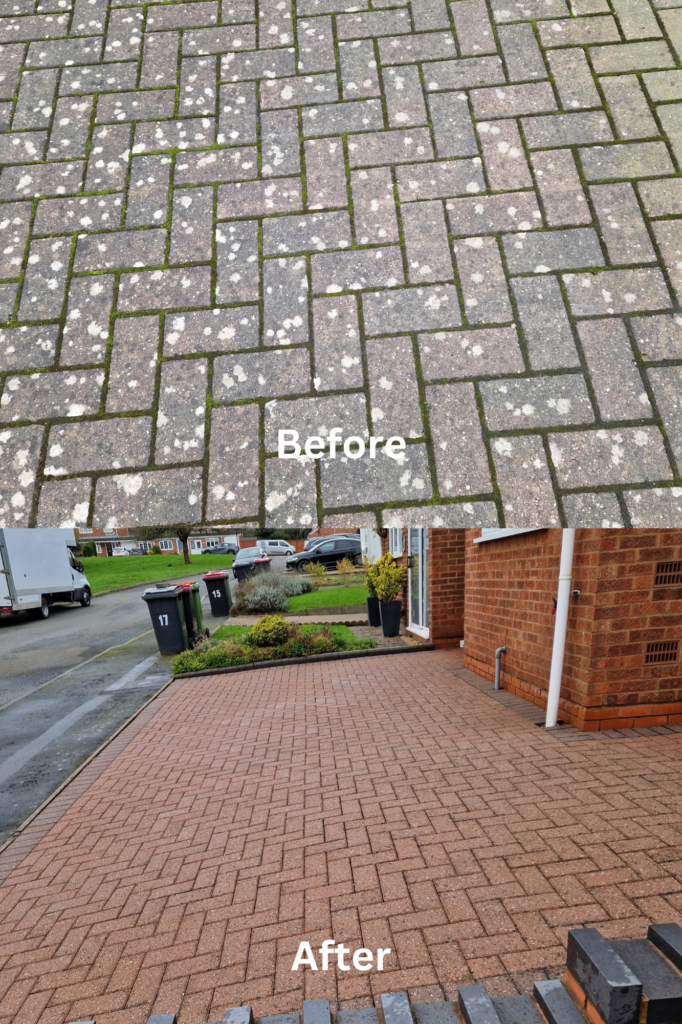
DIY jet washing can be suitable for smaller areas of sound block paving, particularly when you understand how to use the equipment safely.
However, professional cleaning may be worth considering when:
- The driveway has extensive moss, algae or stubborn staining.
- You’re unsure what pressure or cleaning method is appropriate.
- The paving has delicate, decorative or weathered surfaces.
- Jointing sand has deteriorated or needs attention.
- You want a larger driveway cleaned more efficiently.
Professional cleaning should involve assessing the surface before choosing a method, rather than treating every driveway in the same way.
At MJ Jetwashing Solutions, we consider the condition and material of each surface when discussing our driveway jet washing services.
You can also explore our guide to professional jet washing versus DIY cleaning for more advice.
How Often Should Block Paving Be Cleaned?
There isn’t a fixed cleaning schedule that suits every driveway.
Paving surrounded by trees or positioned in shaded areas may develop moss and algae more quickly than surfaces exposed to plenty of sunlight.
Traffic, drainage, weather conditions and general maintenance also influence how often cleaning is needed.
Regular sweeping and removing organic debris can help keep block paving in better condition between washes.
Rather than pressure washing unnecessarily, assess the driveway periodically and clean it when dirt or organic growth becomes significant.
Frequently Asked Questions
Sound concrete blocks are not usually cracked by appropriate pressure washing alone. However, excessive pressure can damage vulnerable surfaces or worsen existing deterioration.
Aggressive cleaning may affect certain coloured or decorative finishes. Washing can also reveal fading that was already present beneath dirt and algae.
Removing excessive jointing sand can reduce the stability of traditional block paving over time. Existing installation problems may also contribute to movement.
Not necessarily. Sealing depends on the paving material, its condition and the finish required. If sealing is appropriate, the surface must be properly prepared and sufficiently dry.
A suitable surface-cleaning attachment can provide more even coverage, but it still uses pressurised water. Correct equipment settings and technique remain important.
Keep Your Block Paving Clean Without Unnecessary Damage
Jet washing can be a safe and effective way to refresh block paving, provided the cleaning method is appropriate for the surface.
The main risks come from excessive pressure, poor technique, damaged paving and failing to replace jointing sand where necessary.
Taking time to assess the driveway, using suitable equipment and maintaining the joints afterwards can help protect its appearance and condition.
If you’re unsure whether your paving is suitable for pressure washing, professional advice can help you make an informed decision.
At MJ Jetwashing Solutions, we provide driveway and exterior cleaning services in Coleshill and surrounding areas, including Water Orton, Curdworth and Marston Green.